ژورنال سایت خبری سیاسی ژورنال

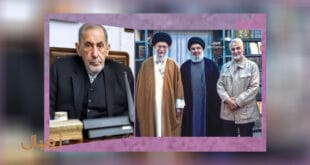
Hossein Salami, who served as the commander-in-chief of the Islamic Revolutionary Guard Corps (IRGC) since 2019 and was killed during the recent Israeli strike, had been sanctioned by the European Union for his role in the bloody crackdown on the November 2019 protests.
Of course, the EU sanctions were never meant to be the ultimate blow to Salami or to the Islamic Republic as a whole. These political condemnations carried symbolic weight—no one expected the embattled commander to be planning a holiday in Europe, nor to spiral into depression at being denied its scenic landscapes. After all, those in power in Iran have access to all the luxury, leisure, and indulgence they desire. They’ve never cared much for personal sanctions.
What truly struck at the heart of the regime wasn’t just the death of Hossein Salami as head of the IRGC. It was the collapse of the Islamic Republic’s image of invincibility. The regime was forced to confront a painful truth: that its claims to power no longer carry weight among the public, and that none of its officials—no matter how senior—are beyond reach. Perhaps next it will be Qalibaf, or Pezeshkian, or even Khamenei himself. We wait.
The regime had crafted a myth around its military commanders, portraying them as giants capable of striking enemies anywhere, at any time—even far beyond Iran’s borders. For a while, this narrative found traction, aided by its proxy networks in the region. But the recent spate of targeted assassinations has laid that illusion bare. These so-called giants are, in reality, nothing more than mosquitoes—buzzing around the ears of the people, nothing more.
And this very vulnerability, this unravelling of the regime, offers new opportunities. The more discredited the regime appears, the more it energises the people. With clear strategic planning, the path towards overthrow becomes smoother. In the coming days, we will attempt to map this road in greater detail.